

A calmer safari arrival depends less on travelling faster and more on having the details organised. A stress free transfer to safari lodge starts with a clear plan for timings, luggage and how the journey fits into the rest of your itinerary. It’s understandable to feel unsure when choosing between private road transport, self-driving and air travel, especially after a long journey.
The right option should suit your route, schedule and comfort, rather than add pressure to travel day. With a private road transfer, the passenger journey is dedicated to your travelling party. Zaf Travel provides private transfers to safari lodges and game reserves in South Africa, offering a practical way to plan the road leg without arranging the drive yourself.
This guide explains what to organise before departure, how to plan for luggage and travel fatigue, and how to compare private transfers, self-driving and flights. You’ll also find ways to coordinate the transfer with the rest of your itinerary, so you arrive with fewer unanswered questions and time to settle into the next part of your stay.
Key Takeaways
- Plan around your full itinerary, including the pickup point, lodge destination and travel date.
- Organise luggage and journey essentials before departure to reduce last-minute pressure.
- Compare private road transfers, self-driving and flights by the level of control and coordination each requires.
- A stress free transfer to safari lodge starts with clear arrangements and realistic expectations, not a promise of a flawless journey.
- Understand how dedicated passenger transport differs from shared shuttles and safari activities.
What makes a transfer to a safari lodge feel stress-free?
A safari lodge transfer is one part of a wider journey, which may also include an arrival connection, time at the lodge and onward travel. A calm transfer starts with practical arrangements that are clear: where the journey begins and ends, how transport fits the itinerary, and what to expect along the way. It doesn’t require every part of the day to go exactly to plan.
A stress free transfer to safari lodge is a journey with clear arrangements, transport suited to the itinerary and realistic expectations about travel time, luggage and connections. A safari lodge is a place to stay in or near a natural area, often with access to wildlife experiences. For more context, see What is a safari lodge?
Plan the transfer alongside the rest of your itinerary to spot potential pressure points. Your arrival time, lodge check-in and any planned activity may all affect the day’s schedule. Leave flexibility around connections, and make sure the journey details you share are accurate. This helps keep the arrangements clear if travel conditions or timings change.
The transport options work differently. Private road transport provides dedicated passenger transport for a group. Self-driving puts the traveller in charge of the vehicle and route. A shared shuttle carries passengers travelling together, while a flight covers part of the journey by air. Each option involves a different level of control and coordination. None is automatically right for every itinerary.
What can cause unnecessary stress on transfer day?
Uncertainty can make a straightforward journey feel harder than it needs to be. If the meeting point, schedule or destination details aren’t clear, travellers may have to resolve logistics while managing bags and keeping to the day’s plans. Changes made late in the process can also affect coordination, particularly when the transfer connects with another part of the journey.
- Keep the pickup point, destination and travel date together in your itinerary.
- Plan for your luggage and the possibility of feeling tired after a long journey.
- Share changes to your travel arrangements promptly so the plan can be updated.
Why does private road transport suit some safari travellers?
Private road transport is dedicated to the passengers making that journey, rather than shared with unrelated travellers. It can suit people who value a direct journey arranged around their itinerary and prefer not to manage the drive themselves. This makes it a practical alternative to self-driving for the road leg of a lodge trip.
Suitability still depends on your route, schedule and preferences. Some travellers value the independence of driving; others prefer to leave the road journey to dedicated transport. Flights may suit itineraries where air travel is part of the planned connection. Consider the whole journey, not just the transfer, before choosing an option.
How to prepare for a safari lodge transfer before departure
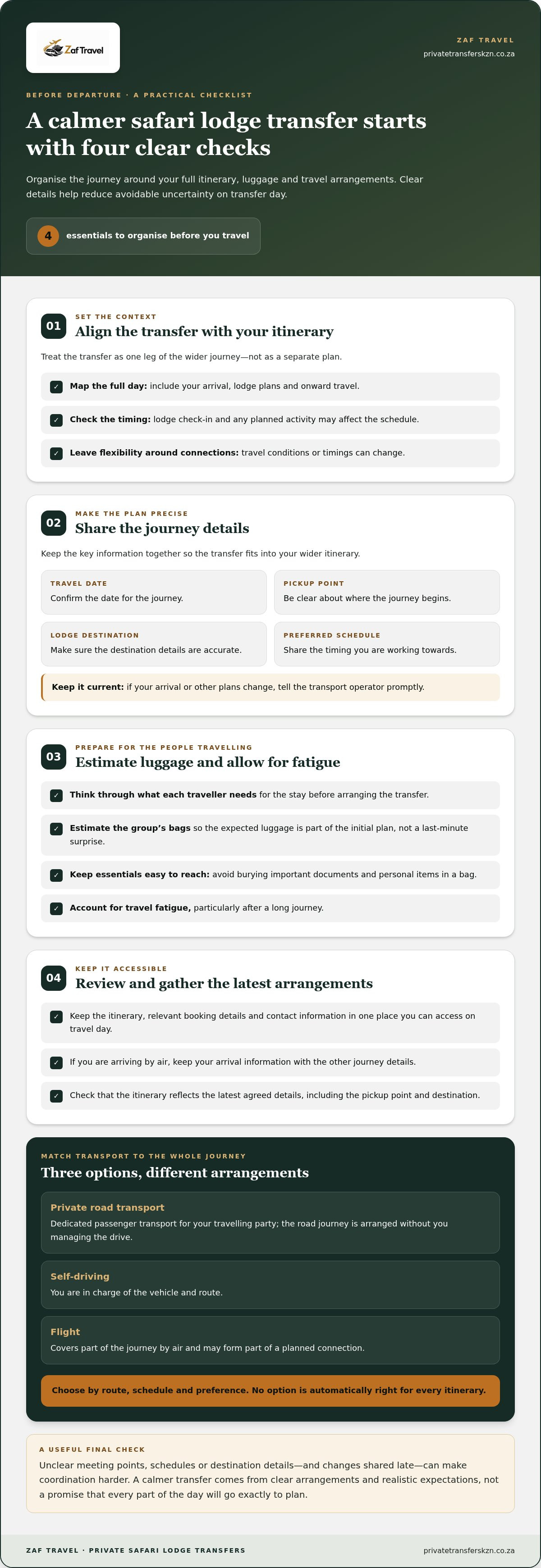
A little preparation can remove avoidable questions from the journey. First, align the transfer with your wider itinerary. Then bring the essential details together before travel day. The pickup point, lodge destination and travel date form the basis of the plan. If one is incorrect or missing, even an otherwise well-organised schedule can be difficult to follow.
Use this sequence to organise the essentials:
- Align the itinerary. Set out how the transfer fits with your arrival, lodge plans and onward travel. Allow realistic flexibility around connections.
- Share the journey details. Provide the travel date, pickup point, lodge destination and preferred schedule to the transport operator.
- Estimate your luggage. Decide what you’ll bring before arranging the transfer, and consider how many bags the group will be travelling with.
- Review the arrangements. Keep the relevant booking and contact information accessible, and make sure your itinerary reflects the latest agreed details.
Which journey details should travellers organise?
Be precise about the travel date, where the journey begins, the lodge destination and the schedule you’re working towards. These details place the transfer within the full itinerary, rather than treating it as a separate leg. If your arrival or other plans change, share the update promptly with the transport operator. Clear, current information makes it easier to coordinate the journey.
Keep everything in one place, such as an itinerary you can access on travel day. Include relevant booking details and contact information alongside the pickup point and destination. If you’re arriving by air, keep your arrival information with the other journey details. This saves you searching through separate messages or documents when you’re tired or managing luggage.
How can luggage planning make the journey easier?
Think through what each traveller needs for the stay, then estimate the group’s luggage before arranging the transfer. This makes the expected load part of the initial plan instead of a last-minute surprise. Keep essential documents and personal items easy to reach, rather than buried in a bag. Separating items needed during the journey from those packed away can also make travel-day handling more orderly.
Preparation won’t control every part of a journey, but it can make the arrangements easier to understand and follow. For a stress free transfer to safari lodge, keep the latest itinerary, booking information and practical details together. Zaf Travel provides private road transfers to safari lodges and game reserves, with dedicated passenger transport for travellers’ journeys. Explore private safari lodge transfers as part of your travel arrangements.
Private transfer, self-drive or flight: which option fits your journey?
Each transport option shapes more than the distance between your pickup point and the lodge. Consider how much control you want, who will manage the travel arrangements and how the transfer connects with the rest of your itinerary. A road journey keeps the trip overland. A flight covers part of the journey by air, but you may also need to coordinate connections to and from the airport or airstrip.
A private road transfer is dedicated to your travelling group, while a shared transfer carries passengers travelling together. That difference affects how the journey is coordinated, but it doesn’t make one transport mode right for every traveller. Use the comparison below to weigh the practical trade-offs.
| Option | Control | Coordination | Route experience |
|---|---|---|---|
| Private road transfer | Dedicated passenger journey | Road transport is arranged around the group’s itinerary | Travel overland between pickup point and lodge |
| Self-drive | Traveller manages the vehicle and route | Driving and route decisions sit with the traveller | Make the road journey independently |
| Flight | Travel depends on the planned air connection | Allow for connections between air travel and the lodge | Cover part of the journey by air |
When might a private road transfer be the practical choice?
Private road transport can suit travellers who want a dedicated passenger journey without managing the drive themselves. It connects a pickup point with a lodge itinerary by road, with the journey arranged for the travelling group rather than shared with unrelated passengers. This can be a useful fit when road transport forms a straightforward part of the overall plan.
When might self-driving or air travel suit a different itinerary?
Self-driving may appeal if you want to manage your own route and make driving part of the trip. Flights may suit an itinerary built around air connections, though the full plan still needs to account for the journey between the airport or airstrip and the lodge. Consider each leg, not only the main stretch.
Before deciding, look at the itinerary as a whole. Who will manage the route? How many connections need coordinating? Do you want an overland journey or a flight as part of the travel plan? Answering these questions helps match transport to your schedule and preferences. A stress free transfer to safari lodge is less about choosing the same option as another traveller and more about selecting transport that fits your journey.
How to keep the transfer day calm and predictable
A calm transfer day doesn’t depend on controlling every part of the journey. It comes from having the important details ready and knowing what to do if plans change. Road conditions, connection delays and other travel disruptions can be outside your control. Your documents, essentials and access to itinerary information are easier to prepare in advance.
Use this travel-day checklist to keep the practical details within reach:
- Keep travel documents accessible. Store the documents you’ll need separately from luggage you don’t expect to open during the journey.
- Pack essential medication and personal items where you can reach them. Think about what you may need during the transfer, not only after arriving at the lodge.
- Make itinerary details easy to find. Keep the pickup point, destination and relevant booking information together.
- Have contact information available in more than one way. Keep a copy with your travel documents as well as on your phone, so one unavailable device doesn’t leave you without the details.
What should stay within easy reach during the journey?
Prioritise items you may need at short notice, such as travel documents, essential medication and personal necessities. Keep them apart from bags packed for your stay. Make sure you can access journey information without searching through messages or relying on a single device. A written copy of key details can be a useful backup if your phone runs out of power or is unavailable.
How should travellers handle schedule changes?
If a flight or another connection changes, pass on the new information promptly to the transport operator. Keep the update clear: explain what has changed and share the revised details you have. Timely communication gives the transport arrangements a clearer basis for responding, but it can’t remove every effect of a delay. Don’t assume updated information is being monitored automatically.
Build flexibility into the wider itinerary instead of planning every stage with no room for disruption. For example, consider whether a delay to an arrival connection could affect the next planned activity, and avoid treating an estimated arrival time as a guarantee. This matters especially when one journey leg depends on another. Keep expectations realistic and focus on the next confirmed step if the schedule shifts.
Good preparation reduces uncertainty; it doesn’t promise a flawless journey. If arrangements change, a calm, concise update is more useful than several conflicting messages. Keep a record of the latest information and use it as the reference point for the rest of the day. These habits can make a stress free transfer to safari lodge easier to manage, even when plans need adjustment.
Zaf Travel provides private road transfers to safari lodges and game reserves, with dedicated passenger transport for travellers’ journeys. Arrange a private safari lodge transfer as part of your travel plans.
A private safari lodge transfer with Zaf Travel
Choosing private road transport is one part of planning a lodge journey. Zaf Travel provides private transfers for travellers heading to safari lodges and game reserves. This dedicated passenger transport gives you a road option to include in your itinerary without making the drive yourself.
A transfer has a specific role: it takes passengers between journey points. It isn’t a shared shuttle, safari tour or game drive, and it doesn’t replace the lodge stay or activities planned there. Keeping these arrangements separate clarifies what each part of the trip involves, from reaching the lodge to enjoying the safari experience.
What does a dedicated transfer mean for the traveller?
Dedicated transport means the journey is arranged for your travelling party, rather than shared with unrelated passengers. It can suit travellers who want private passenger transport as part of their lodge itinerary. The transfer then has a clear place in the wider plan: road travel from the agreed pickup point to the lodge destination.
Zaf Travel provides private transfers to destinations including Phinda Private Game Reserve, Thanda Safari and Rhino Ridge Safari Lodge. This gives travellers a road transport option to include when planning their lodge journey. The transfer remains a transport service, not an excursion or a promise that every part of the day will unfold without change.
That distinction is useful when organising a trip with several moving parts. A lodge booking, a safari activity and the road journey each serve a different function. Treating them as separate itinerary items makes it easier to see where the transfer begins and ends, and which other arrangements sit around it.
What is the next step when planning a lodge journey?
Start by placing the road journey within the full itinerary. Note the travel date, pickup point, lodge destination and the schedule you’re working towards. Consider how the transfer connects with your arrival and any plans at the lodge, then keep the latest details together. If plans change, clear and timely communication helps keep the travel arrangements aligned with your updated itinerary.
A stress free transfer to safari lodge is supported by realistic expectations and clear coordination. Private road transport may suit you if you value a dedicated journey and prefer not to self-drive. The right fit still depends on your route, schedule and personal preferences.
Zaf Travel’s private transfers connect travellers with safari lodges and game reserves through dedicated road transport. Explore Zaf Travel’s private safari transfers as you plan the road leg of your lodge journey.
Make your next travel decision with confidence
Your journey doesn’t need to be perfectly predictable to feel well planned. Give the transfer a clear place in your itinerary, keep essential details within reach and leave room for travel plans to shift. These small decisions can make the day feel more manageable before it begins.
If a dedicated road journey suits your plans, Zaf Travel provides private transfers to safari lodges and game reserves. The passenger transport is arranged for your travelling party, rather than as shared shuttle travel. It’s a practical option to consider when shaping a stress free transfer to safari lodge around your schedule and preferences.
Take the next step by exploring private transfers to safari lodges with Zaf Travel and giving the road leg of your journey a clear place in your plans. Organise the pickup point, destination and travel date, then plan the rest of your itinerary around those details.
Frequently Asked Questions
Is a private transfer to a safari lodge less stressful than driving yourself?
It can be, particularly if you’d rather not manage the route and driving responsibilities yourself. With a private transfer, you can focus on your travel plans instead of navigating unfamiliar roads. It’s still an overland journey, so consider how road travel fits your preferences and schedule. For a stress free transfer to safari lodge, think about which parts of the journey you want to manage personally.
What information should I have ready when arranging a safari lodge transfer?
Have your travel date, pickup point, lodge destination and preferred schedule to hand. If you’re arriving by air, keep the relevant arrival details accessible so they can be included in the journey plan. It’s also useful to know how many people are travelling and how much luggage the group expects to bring. Share any changes as your itinerary develops.
Can a private transfer fit around my safari lodge itinerary?
It can form one leg of a wider itinerary, linking your pickup point with the lodge journey you’ve planned. Think through what happens before and after the road transfer, such as an arrival connection or a planned lodge activity. This helps you assess whether the schedule is realistic and where flexibility may be needed. A private transfer is transport, so plan lodge activities separately.
What should I keep accessible during a road transfer to a safari lodge?
Keep travel documents, essential medication, personal necessities and key journey details easy to reach. For example, place your identification and any information needed for the next connection somewhere you won’t have to search for it among packed belongings. Save important details on your phone, and keep a written note as a backup. That gives you another way to refer to the plan if your device isn’t available.
What should I do if my flight or connection is delayed?
Contact the transport operator as soon as you know your schedule has changed, and share the updated arrival or connection information. Keep the message concise and factual, including what has changed and the latest details you’ve received. Don’t assume the delay will be tracked automatically or that the original plan will still apply. Once you’ve sent the update, use the revised information to reassess the rest of your itinerary.
Is a private safari lodge transfer the same as a shared shuttle?
No. A private transfer is dedicated passenger transport for the travelling party, whereas a shared shuttle carries passengers travelling together. They are different arrangements, so consider whether you want transport dedicated to your group or a shared journey. A private road transfer is also distinct from a safari activity: its purpose is to take passengers between journey points, not to provide a game drive or tour.
Should I choose a road transfer or a flight to reach a safari lodge?
Choose according to the route and how each option fits the full itinerary. Road travel keeps the journey overland, while flying may involve additional transport connections between an airport or airstrip and the lodge. Consider the number of stages, your preferred way to travel and how each leg fits your schedule. The most suitable option is the one that works with your plans, not a universal rule.


